The Office of Reconciliation Ministry (ORM) is an international organization whose mission is to put the teaching of Jesus Christ into action by advancing relationships between people of different beliefs and points of view. ORM strives to explore various types of racism and the ways it affects our lives. There are so many aspects of racism that we might not even be aware of such as cultural, stereotyping, internalized, institutionalized, denial—too many to list. Unaware racism can have subconscious negative influences in our lives. Through correspondence, dialogue, workshops, seminars, and training, we seek to bring light to these dark areas using God’s guidance whose desire is for us to live in harmony (John 17:21).
“Now we are ambassadors for Christ, as though God were pleading through us; we implore you on Christ’s behalf, be reconciled to God.” ~2 Corinthians 5:20 (NKJV)

October 2026 Monthly Letter
Dear Reconcilers,
This month I would like to share some of my thoughts on a topic that is near and dear to my heart. Thank you for your participation and support in our mission to unite people in our nation and around the world by focusing on the values we all share.
Why Reconciliation Is So Important Today
We live in a world that is filled with division.
Families are hurting. Friendships have been broken. Churches have experienced conflict and our nation seems more divided than ever. In times like these, the message of reconciliation is not only important – it is essential.
God’s desire has always been to reconcile people to himself. Through Jesus Christ, God made a way for every person to received forgiveness for wrongdoing and be restored into a right relationship with him. But God did not stop there. He has also called each of us to share that same message with others. As the words of 2 Corinthians 5:18-19 remind us, God “reconciled us to himself through Christ and gave us the ministry of reconciliation.”
Reconciliation is more than settling disagreements. It is allowing God’s love, grace, and forgiveness to heal broken relationships. It is also a willingness to take the first step, even when it is difficult. When we choose forgiveness over bitterness and peace over conflict, we reflect the very heart of Christ.
Today our homes, churches, communities, and our nation desperately need people who will build bridges instead of walls. Every act of kindness, every word of encouragement, and every effort we make to restore a broken relationship points others to Jesus – to the one who reconciled all of us to God.
My prayer is that each of us will faithfully answer God’s call to be ambassadors for Christ, to share his message of reconciliation wherever he leads us. In a world longing for hope, may we be instruments of his peace and living examples of his grace.
As Jesus declared in Matthew 5:9, “Blessed are the peacemakers, for they shall be called the children of God.”

Support Our Mission
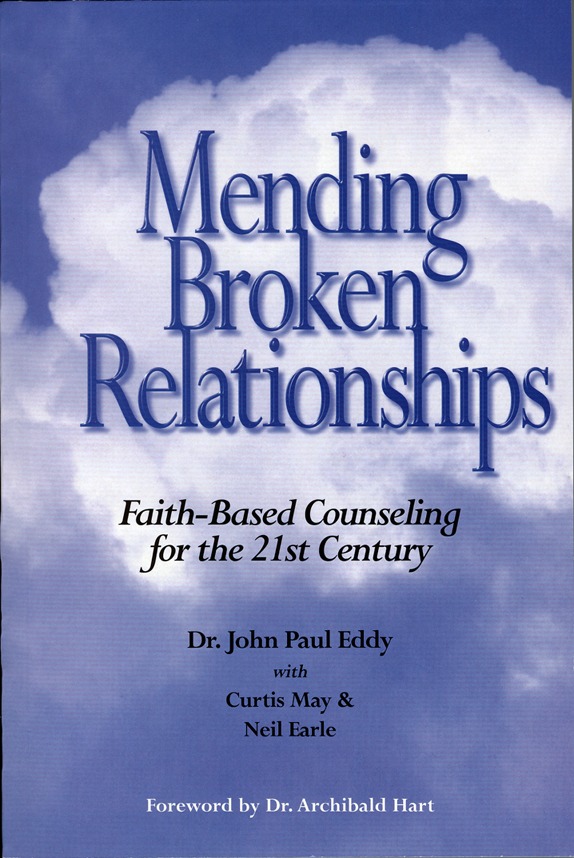
OUR BOOKS
Contact Us for your copy of either book
PAST LETTERS

September 2026 Monthly Letter